Twenty thousand people show up for Ravenswood On Tap every July, packing Ravenswood Avenue between Berteau and the train tracks for two days of flights, live music, and mini golf next to the beer tents. It is the kind of number that gets a corridor branded as a "destination," a label often given to places that draw a crowd. But destinations are what you visit. Malt Row is what people who live within walking distance of it never stopped doing on a Tuesday night, long after the festival tents came down.
That distinction matters more than it sounds. The story most articles tell about this stretch of the Ravenswood Industrial Corridor is the festival story: the beer garden, the 20,000-person crowd, the two-day spectacle. The story residents actually live is quieter. It is Begyle's Sunday yoga class upstairs from the fermenters. It is Demo Brewing's garage door rolled up on a Wednesday with someone's dog asleep under the table. It is a growler membership that has nothing to do with any festival at all. If you already live in Ravenswood, this is the version worth knowing, because it is the one you can use fifty weeks a year, not two.
The corridor is longer than the branding suggests
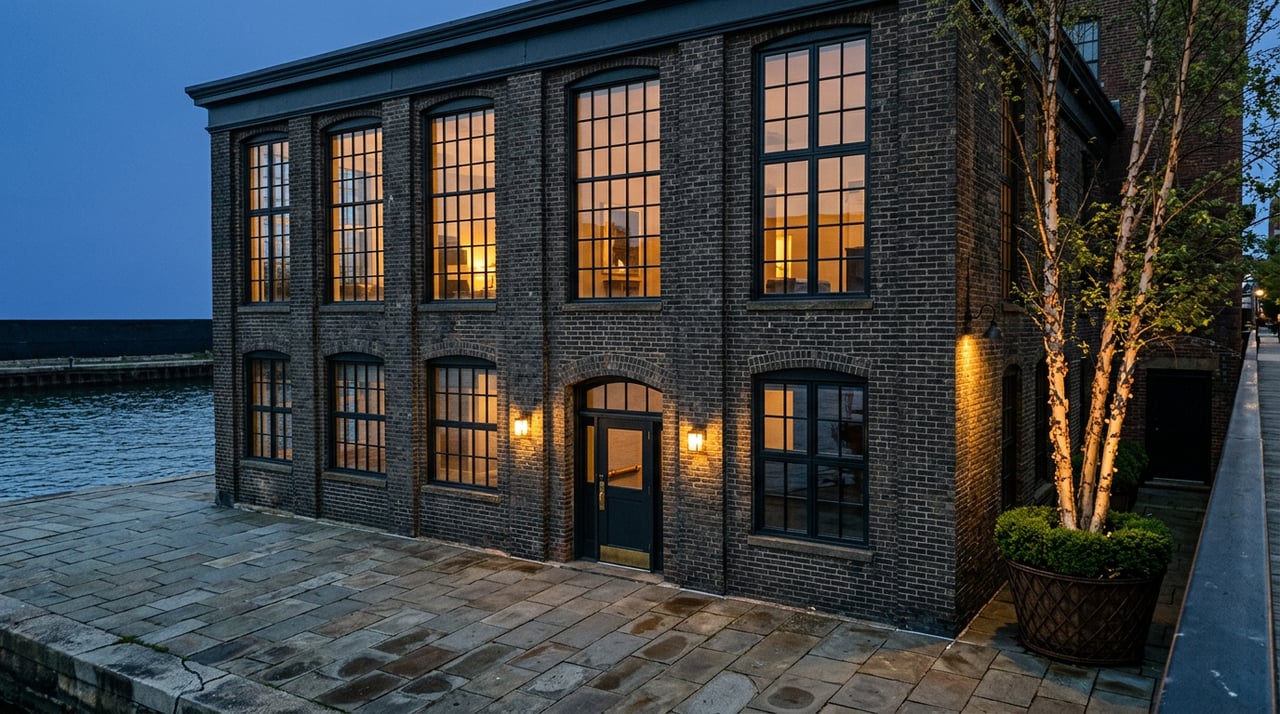
Malt Row, as the Greater Ravenswood Chamber of Commerce defines it, runs roughly a mile and a half along Ravenswood Avenue between Irving Park Road and Balmoral Avenue, bounded east to west by Ravenswood and Leavitt. That is the brewery stretch. But the same rail-adjacent industrial spine keeps going south, too. The Ravenswood ArtWalk footprint, a separate chamber-branded identity, covers Ravenswood Avenue from Lawrence south to Irving Park, the block immediately below Malt Row. Put the two together and you get one continuous corridor of former manufacturing buildings, from Lawrence up through Bowmanville, that the neighborhood has quietly turned into its own walkable spine, no car required.
Practically, that means the corridor is reachable by three separate ways of getting there without driving: the CTA Brown Line at the Irving Park or Montrose stops, the UP-North Metra at Ravenswood, and Divvy docks along the way. A resident heading to Malt Row from a condo near Lincoln Square or a two-flat off Damen isn't planning a trip. They're deciding between the brown line and a bike.
The corridor's six breweries, each with a reason to actually go back
The corridor's breweries aren't interchangeable pours in a row. Each one has settled into a different role in a regular's week, and that's the part visitor-guide roundups tend to flatten.
Begyle, the first taproom to open on the corridor, still runs Chicago's first Community Supported Brewing program, where members pick up a growler or two a month the way a CSA box works for produce. It's the closest thing Malt Row has to a standing weekly errand. Add in the trivia nights, the food truck rotations, and a dog-friendly patio, and Begyle functions less like a bar and more like a clubhouse.
Right next door, Dovetail keeps a lower key. The founders trained as Master Brewers in Germany, and the taproom's continental lagers and rauchbiers reward the kind of regular who wants the same excellent pilsner every visit rather than a new hazy IPA every week.
Spiteful Brewing sits at the opposite end of the strip near Andersonville, next to Half Acre's larger Balmoral location, and runs a simpler operation: sixteen taps, a long bar, dartboards, and a bring-your-own-food policy that makes it a default stop before or after dinner elsewhere. Half Acre itself operates two spaces on the corridor, a Lincoln Avenue retail shop and original taproom, and the bigger Balmoral location with a full kitchen and beer garden that functions as the corridor's default group hangout.
Demo Brewing occupies the middle of the row in what amounts to a garage with taps. There's no kitchen, so regulars bring their own food or order delivery, and the taproom runs cashless, with board games on the tables and a private rental policy capped at forty people for anyone who wants the space for a birthday or a work happy hour. It is the least performative bar on the strip, which is exactly the appeal.
Is/Was Brewing, which opened its Ravenswood Avenue headquarters in 2024, leans into the corridor's collaborative streak rather than competing with it. Its opening weekend poured guest drafts from Hop Butcher For The World and Begyle alongside its own saisons, a small detail that says more about how this stretch of breweries actually relates to itself than any festival flyer does. Round out the corridor with Cultivate by Forbidden Root for a full meal between stops, KOVAL Distillery for whiskey and gin tastings, and VIN312 Winery for the rare non-beer detour, and you have a corridor built for regulars who rotate through it rather than tourists who check it off once.
The one thing that actually changed this year
Malt Row's restaurants change more often than its breweries, and the most consequential shift this year happened just off the corridor at Del Sur, the Filipino American patisserie that won a Jean Banchet Award after opening in 2025 and quickly became the kind of place with a line out the door most mornings. Owner Justin Tiu Lerias closed the bakery on June 14, 2026 to expand into the neighboring storefront, adding a larger seating area, an expanded pour-over coffee menu, and a dedicated lamination room for more pastry output. The plan called for reopening in late July, meaning the expanded Del Sur has now had roughly a month of normal operation.
The corridor's other anniversary lands in less than two weeks, not July
If Ravenswood On Tap is the loud, 20,000-person version of Malt Row, the Ravenswood ArtWalk is the corridor showing its other identity. This year marks the 24th annual Tour of Arts and Industry, running Saturday, September 12 and Sunday, September 13 from 11 a.m. to 6 p.m., stretching along Ravenswood Avenue from Lawrence south to Irving Park. It's the same industrial buildings that house the breweries, opened up for the one weekend a year when the ceramicists, metalworkers, and manufacturers who normally work behind closed doors let the neighborhood in.
Two things about this year's ArtWalk are worth knowing if you're planning a walk rather than a drive-by. The indoor arts markets are set at Bad Coffee on Berteau and, notably, inside KOVAL Distillery itself, meaning the same building where you'd normally get a whiskey tasting doubles as gallery space for the weekend. And the food lineup skews toward names the corridor already knows, with 5411 Empanadas, Barry Sweets, Sausage Fest Truck, and Soul & Smoke rounding out the Ravenswood and Berteau intersection, while Begyle pours the beer garden, same as it has for years. It's a reminder that the arts corridor and Malt Row aren't really two separate identities. They're one spine of former industrial buildings that the neighborhood has learned to use two different ways depending on the calendar.
What this actually tells you about living here
The gap between the festival numbers and the everyday use is the real signal. A neighborhood that can draw 20,000 people to a beer festival and still keep its brewery taprooms running quiet Tuesday nights with trivia, yoga, and board games isn't relying on tourism to stay interesting. It's a corridor built on repeat visits from people who live close enough to walk. That's a different kind of neighborhood texture than a strip that only comes alive twice a year, and it's the kind of detail that only shows up if you've actually spent a normal week here rather than just a festival weekend.
If you're already walking Malt Row on your own schedule, you already know most of this. If you're weighing what it would mean to live within that walk permanently, whether from a condo near Lincoln Square or a vintage two-flat closer to the tracks, Cara Buffa has spent years following exactly these kinds of neighborhood details across Chicago's North Side and is always glad to talk through what a specific block or building actually offers before you decide anything.